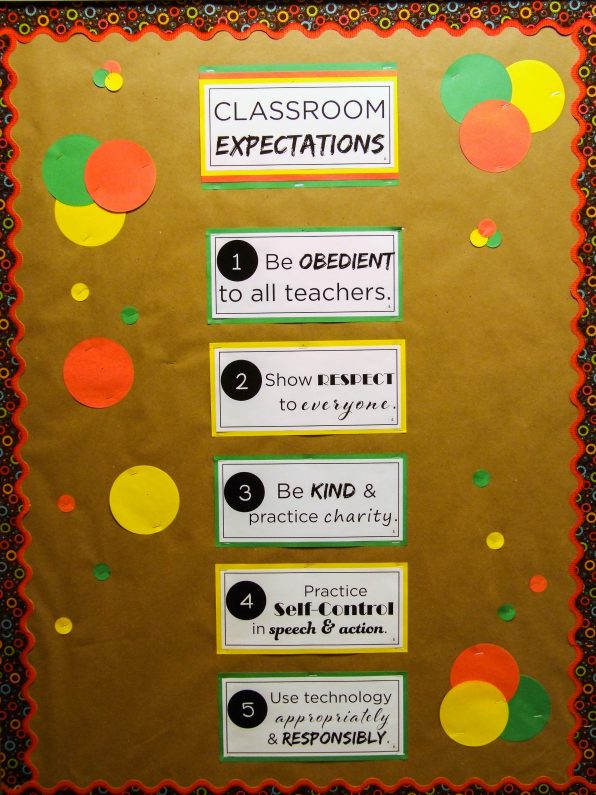

Virtue Expectations and Norms

Virtue Expectations and Norms
Hydie Hess, St. Catherine of Siena School Siena, Vallejo, California
Students begin the year by coming up with norms that will allow the class to run well, and identifying the connected virtue that will help them achieve this goal.
In previous years, I would have students define various norms they see at home, within their friendships, and within the school as a whole. Students would engage in a think-pair-share discussion and identify the common norms they have within those three categories.
After looking at the norms in those three categories, they would write and come up with one norm to share that they feel is necessary to have in the classroom to ensure a successful year. For example:
“Do not laugh at someone while they are asking a question or presenting”
“Do not disrupt a teacher when they are speaking”


I would write down their classroom norms on the board as a list for all the students to see. Afterwards, I would give them a copy of the “virtue cheat sheet” and with their partners, they would have to identify which virtue(s) go with each classroom norm. For example: “Do not disrupt a teacher when they are speaking” would connect with “Respect” “Modesty” “Self-Control” “Docility,” etc. It was amazing with how receptive my students were in engaging in this activity and even more impressed to hear them using the vocabulary so quickly.
Downloads
Free for Openlight Media Plus Subscribers